>> PLAN YOUR VISIT >>
With up to 100,000 visitors a year, The National Showcaves Centre for Wales has a large-scale energy need. We must provide for areas both above and below ground, especially in the three showcaves that form our centrepiece.
A 'green' solution to the energy supply problem was identified in 1939, early in the centre's development, and the first hydro-electric turbine was installed. We were one of the first tourist attractions in the UK to be self-sufficient in energy needs.
Recent technological improvements have allowed energy production to keep up with the centre's expansion and now, when the showcaves are closed at night and during the winter off-season, power is exported to the National Grid.
It all comes down to geology and geography.
The cave systems carry rivers that sink into the limestone, high up on the very rainy mountains to the northwest of the showcaves.

Our green energy saves 150 tons of CO2 from going into the atmosphere every year. We even have a hook-up point for visitors' electric cars. In other words, the electricity they use to get home is generated by the cave river!
It all comes down to geology and geography.
It then rushes steeply down to join the Afon Tawe, which is only 600m to the east and 30m lower down.
Water is diverted into pipes, which are two feet in diameter, from a dam near the cave entrance. These pipes descend 20m to two turbine houses on the valley floor.
This creates a powerful head of water for the two turbines, which are rotated by the water pressure to power a generator.
Our latest hydro-electric powered machine uses half a ton of water every second! It has a maximum efficiency of 87% and can produce up to 62kW.
Allowing for times when the river is too low for full output, the hydro-electric turbine runs for about 8,000 hours per year.
If a family car ran for this time, even at 30 miles an hour it would travel 240,000 miles and would probably need a new engine by the end of the year! Our 'Cink Crossflow Hydro' turbine is 7 years old and is still as good as new!

When the sun shines, its rays hit the 51 solar panels on the roof of our self-catering accommodation, producing 10kW.
There are also 87 solar panels in the caravan park, which can produce up to 26kW.
Despite its small size, the new stone-built turbine house has a solar panel, wind turbine, and waterwheel in addition to the hydro-electric generator. It could be the only building in the world where you can see electricity being produced by four different green energy sources.
You can see this building across the fields near the main road, on the valley floor at the far south of the site.

The National Showcaves Centre for Wales has a responsibility to care for an area of land which is far larger than the facilities directly used by visitors and staff.
It includes the forested mountainsides above the car parks and camping/caravan site, the fields on the valley floor, the Llynfell river gorge, a lake near the Afon Tawe, and nearly 20km of cave passages.
Our policy has always been that conservation of the caves and surrounding area is our number one priority in everything we do.

Our trees help to reduce soil erosion by catching rain within their leaf canopies. This reduces the force of heavy rain and slows down water run-off. Just 100 mature trees intercept approximately 450,000 litres of rainfall a year! Fallen leaves also hold the water, so our trees help to reduce flood peaks further down the Tawe Valley.
There is also a wildlife ecosystem with enough diversity to support breeding areas for birds of prey. Generally, there is no human access to these areas, so wildlife lives there undisturbed.
There are two main forest areas. The eastern area is natural woodland and has a range of tree species that represent the succession of colonisation since the last Ice Age (approx. 10,000 years ago). Birch and pine developed during cold, harsh conditions. Then, in a warming climate, hazel and willow followed, and then finally elm and oak. The area above the car parks and caravan site has been planted with 80,000 broad-leaved trees to make our new forest. During the forest's lifespan of 100 years, every tree will absorb 1 ton of CO2. On the eastern side of the road and near the Afon Tawe is an area of pond and woodland.
Created in the late 20th century and supplied with groundwater, the pond has an island to encourage wetland birds to breed. The island also acts as a refuge for birds in bad winters, or for migratory birds to use during their journeys.

We have installed bat and owl nest boxes to encourage biodiversity in the wide range of wildlife habitats within the centre.
Summertime evenings at the caravan site are enriched with bat sightings and owl calls from the wood above.
Circling Red Kites are now a common sight.
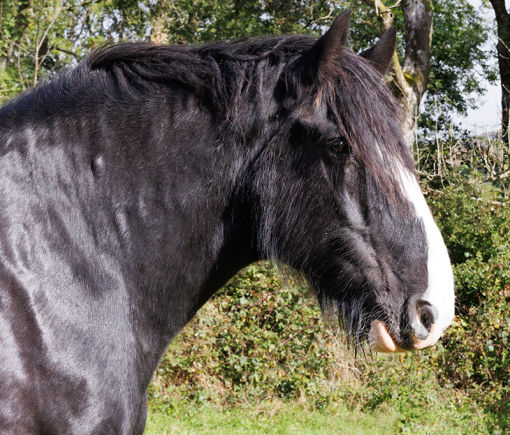
On the centre's farm we breed Shire Horses.
There were approximately one million of these horses in England at the end of the First World War, but heavy horses have been slowly cast aside in favour of tractors.
Their small numbers indicate that they are now at risk.
Shires are commonly referred to as 'gentle giants' owing to their placid nature.
Dan yr Ogof, Cathedral Cave and Bone Cave are all managed and protected by The National Showcaves Centre for Wales. This responsibility is reinforced by their status as Sites of Special Scientific Interest (SSSIs) and as a National Nature Reserve.
We work closely with the regional as well as national conservation and planning bodies, who consider our site to be very special and worth conserving.
Our caves are amongst the most beautiful and finely conserved caves in the UK, and a special caving body oversees cave access and advises on their protection. Their preservation will allow future generations to see the underground marvels nature has created.


Ten attractions all included in the one entry ticket - there is plenty to see and do for all ages (site hub).